Paediatric Speech Pathology
Supporting children to communicate, connect, and participate with confidence
What is Speech Pathology?
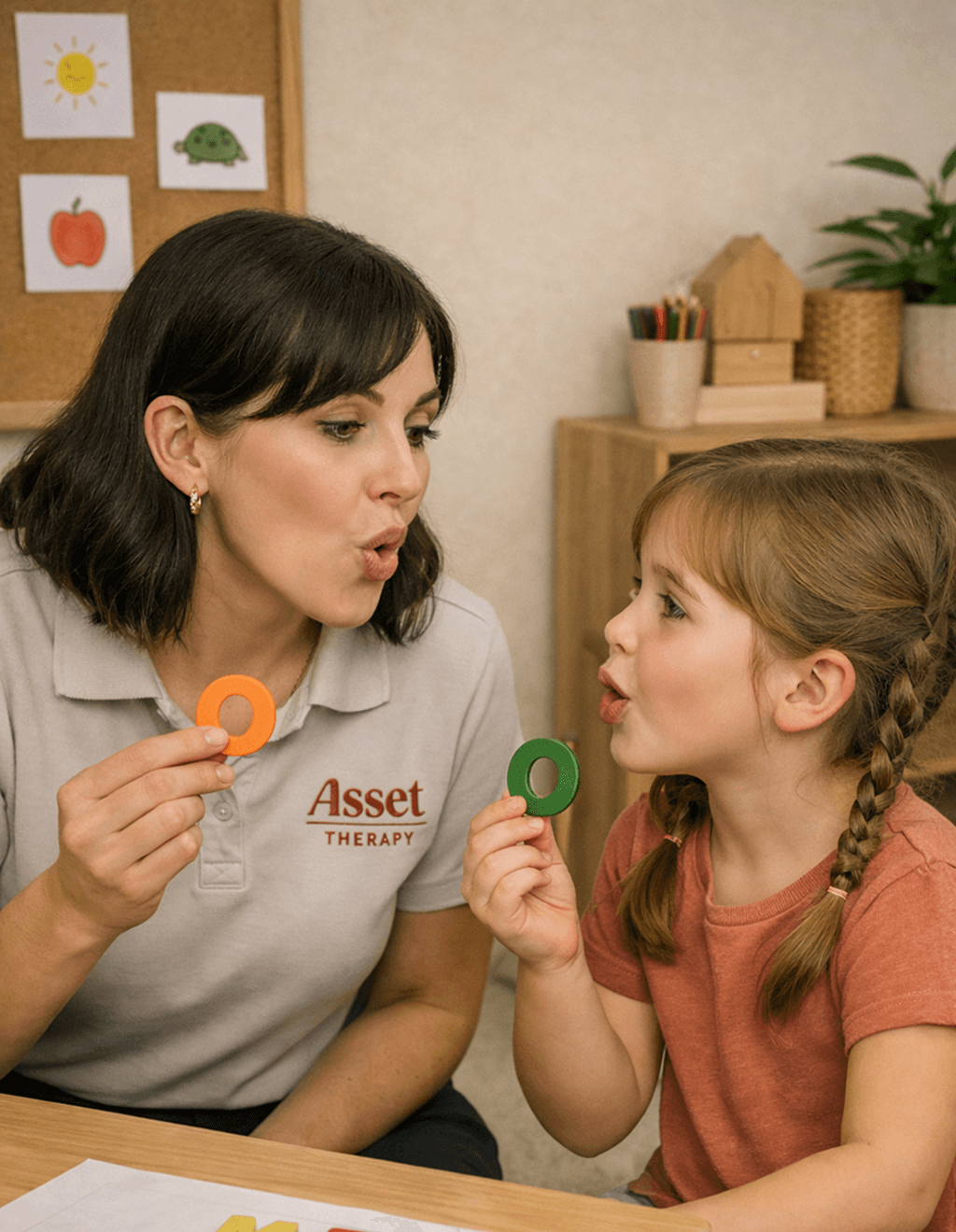
Speech Pathology supports children with communication, language, speech, voice, fluency, literacy, and feeding or swallowing skills. These areas are essential for participating in everyday life at home, school, and in the community.
Our paediatric speech pathologists work with children and their parent/caregivers to understand strengths, identify goals, and provide evidence-based support. Therapy is tailored to each child's needs and may focus on helping them speak more clearly, understand language, express themselves, build social communication skills, or use alternative ways to communicate. We use interest-based, family-centred, and goal-driven approaches to make therapy engaging, practical, and meaningful.
Our Speech Pathology Services
Speech Sounds (Articulation)
Supporting children to produce speech sounds more clearly so they can be understood more easily in everyday communication.
Language Development
Helping children understand and use language, including following instructions, learning new concepts, and expressing thoughts, needs, and ideas.
Social Communication (Pragmatics)
Building skills for conversation, turn-taking, understanding social cues, and using language appropriately in different situations.
Fluency (Stuttering)
Supporting children who stutter to build confidence, communication participation, and strategies tailored to their individual needs.
Voice
Helping children who experience difficulties with vocal quality, pitch, volume, or vocal strain to use their voice more effectively.
Swallowing & Feeding
Supporting children with feeding and swallowing challenges to build safer, more comfortable, and more functional mealtime skills.
Literacy and Cognitive-Communication
Supporting reading, writing, phonological awareness, attention, memory, organisation, and other communication skills needed for learning and daily functioning.
AAC (Communication Devices & Supports)
Supporting children who need alternative or augmentative communication systems, including visuals, communication books, and speech-generating devices.
Hearing Support
Supporting communication needs related to hearing, including listening skills, communication strategies, and working alongside children with hearing loss and their care teams.
Who We Work With
We support children with a range of communication, feeding, and developmental needs, including:
Next Steps
Here’s what to expect when getting started with speech pathology.
Get in Touch
Contact our team to tell us a little about your child and the support you are looking for. We will help guide you through the first steps.
Meet Your Speech Pathologist
Book your 90-minute initial parent/caregiver consultation, which includes 60 minutes face-to-face. This session helps us understand your child’s development, current challenges, and therapy goals.
Assessment & Getting to Know Your Child
Your child will attend an assessment session so we can better understand their communication strengths, support needs, and build rapport in a comfortable, supportive way.
Begin Therapy
From there, we begin therapy sessions tailored to your child’s goals, with practical strategies to support progress at home, in education settings, and in everyday life.